
The Wolves
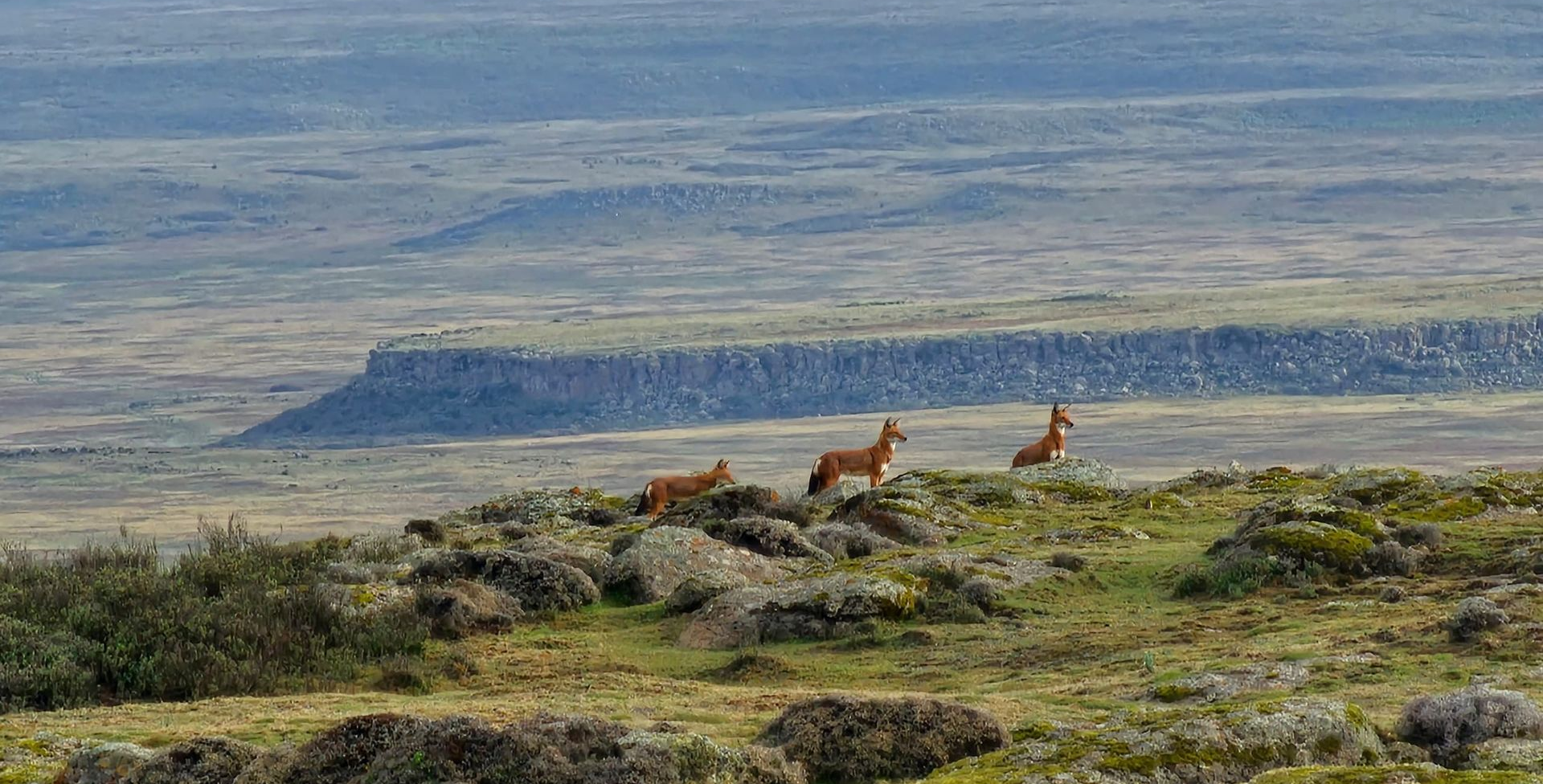
These unusual wolves are highly social and live in family packs, but hunt solitarily for Afroalpine rodents. They have long legs and muzzles, pointy ears, and a distinctive red coat with black and white marks.
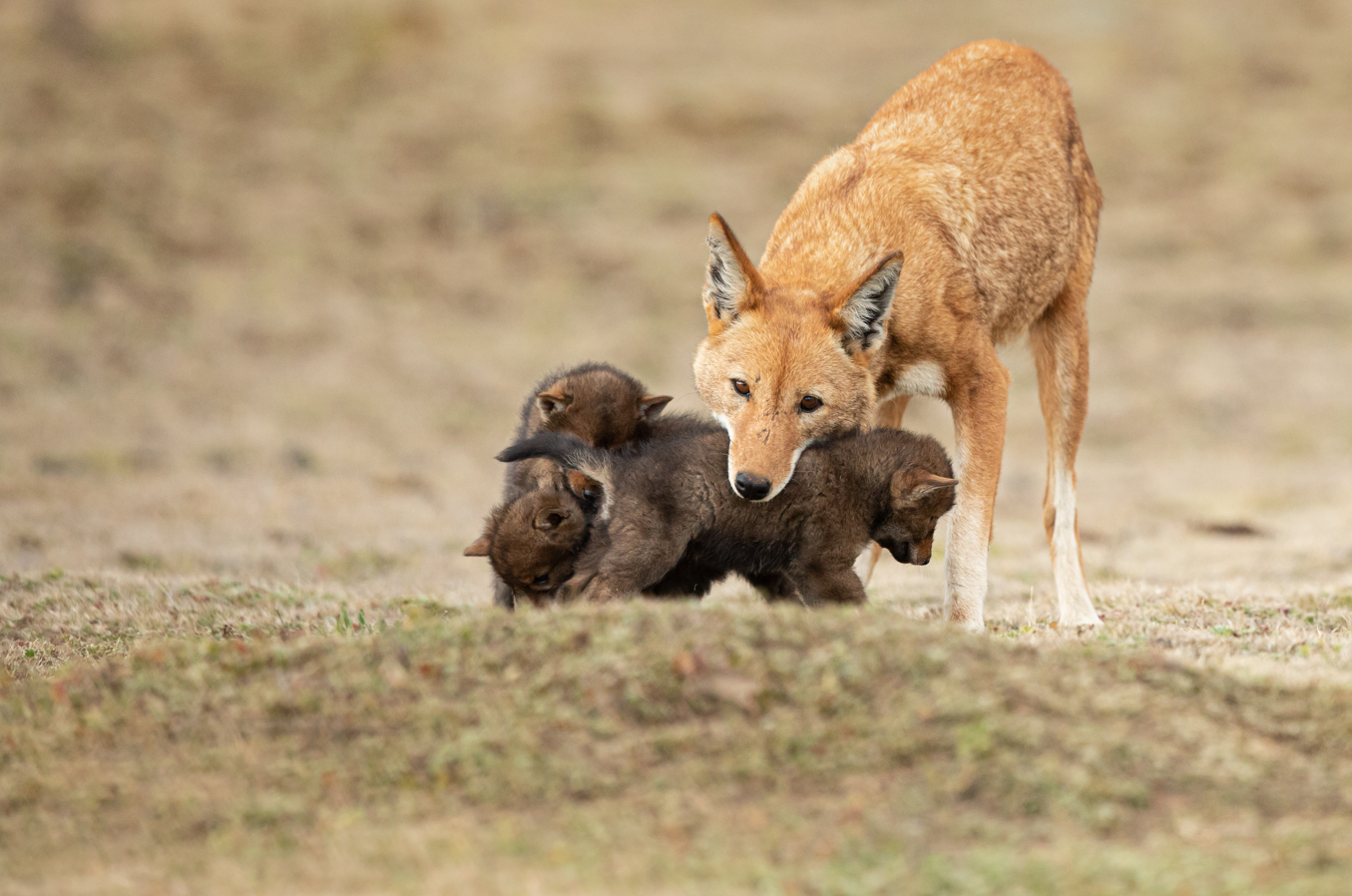
© Adrien Lesaffre
Fact file: species overview
Discover the fascinating world of the Ethiopian wolf, Africa’s rarest carnivore. Learn about its unique behaviour, specialised hunting techniques, social structure, habitat in Ethiopia’s Afroalpine highlands, and the conservation challenges threatening its survival.
Threats: why are they endangered?
Ethiopia currently has the fastest growing human population in Africa. In the Ethiopian highlands these rapid changes create complex challenges for the wolves and other fascinating endemic species.
Due to its montane specialization the Ethiopian wolf was always rare, but today’s threats are all man-induced. Habitat loss and dog-related disease are the most pressing.
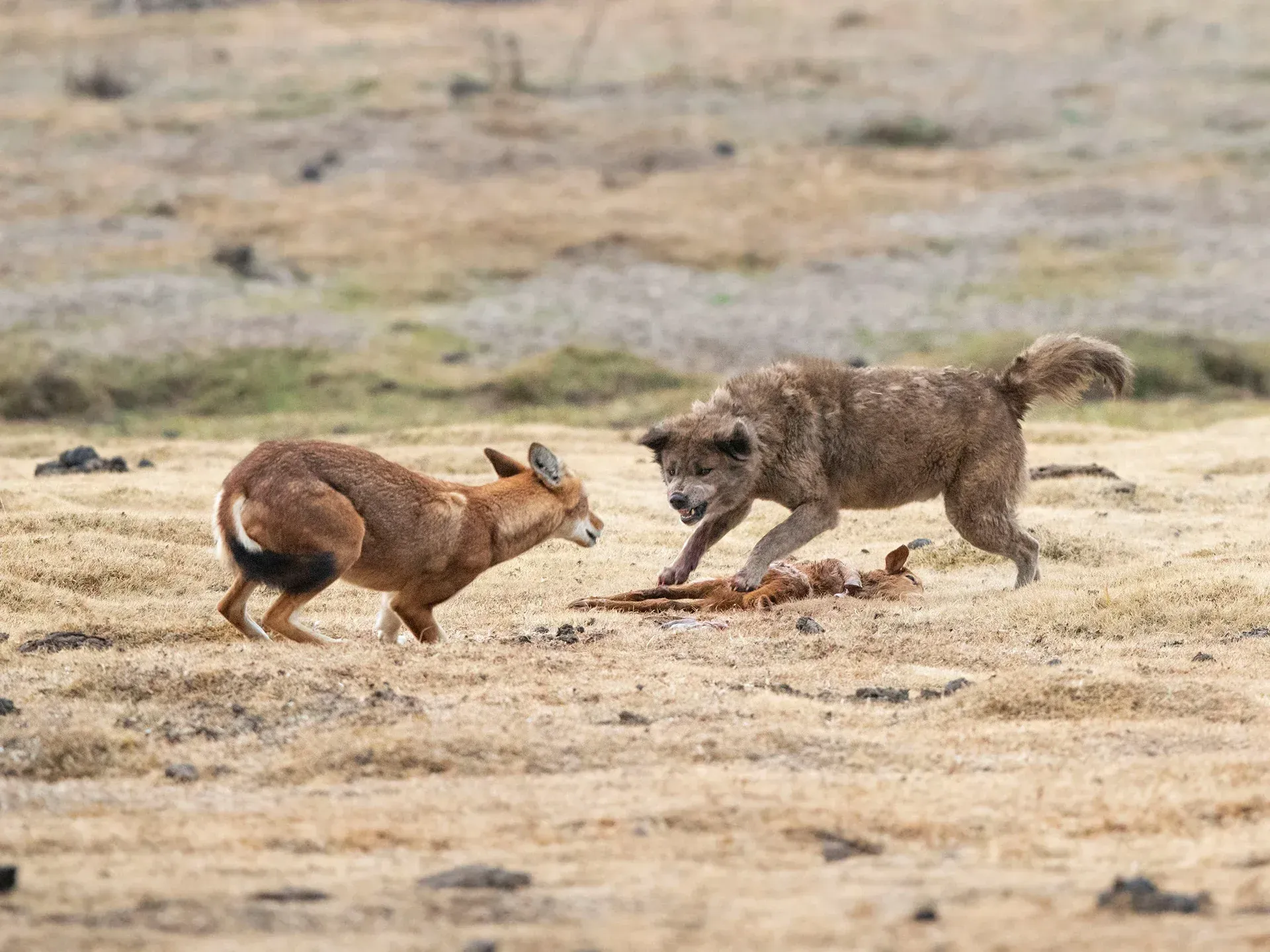
© Daniel Rosengren
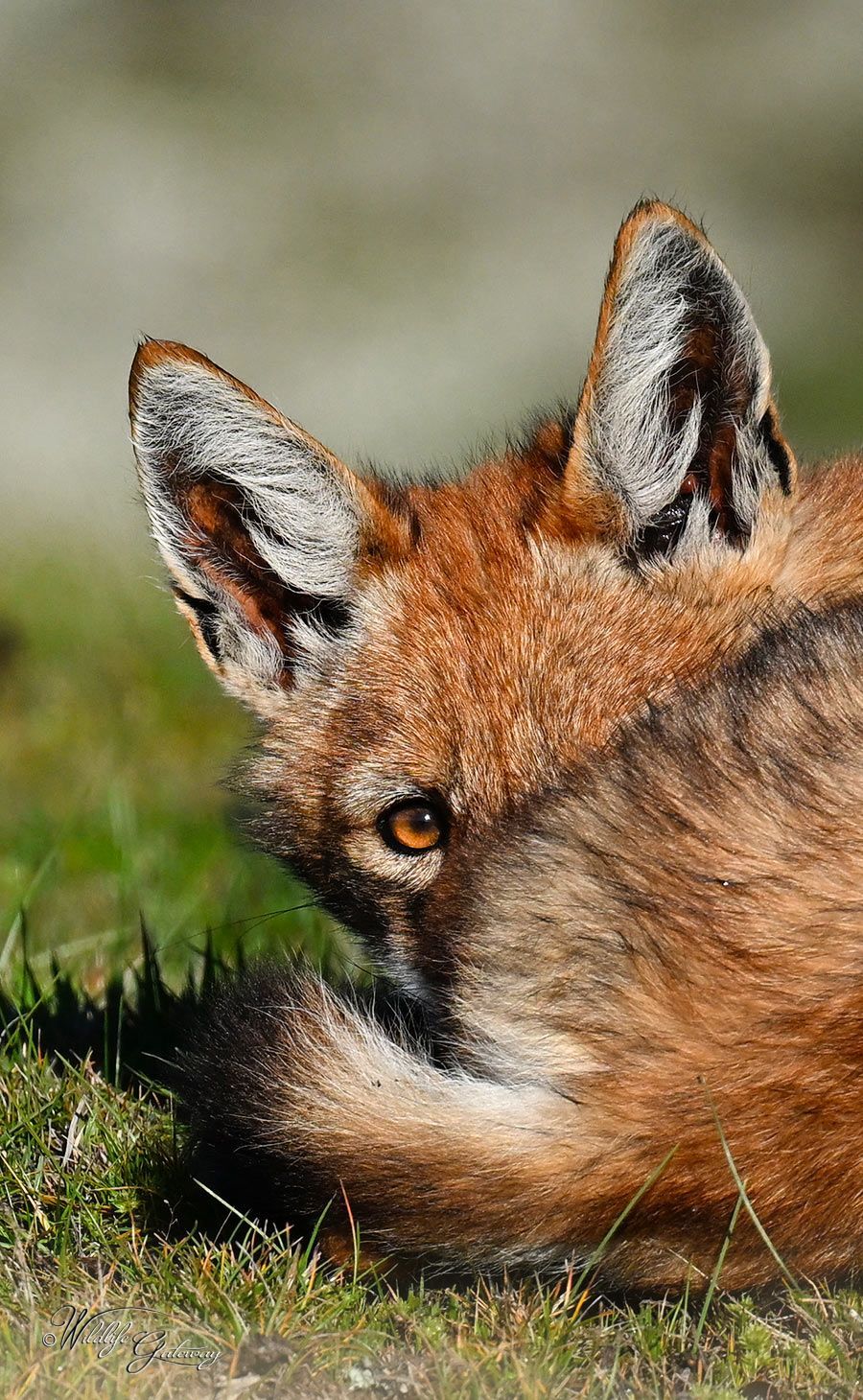
© Carine Lavril
Taxonomy, distribution & status: wolf genetics and populations
A wolf in fox clothing. It might look like a red fox or jackal, but the Ethiopian wolf is a recent descendant of a grey-wolf like ancestor that immigrated to Africa from Eurasia.
Ecology & behaviour: how they feed and act
Ethiopian wolves live in close-knit territorial packs but they forage and feed alone on small prey. Wolves are most active during the day with peaks of foraging activity synchronized with the activity of rodents above the ground (Sillero-Zubiri & Gottelli, 1995a; Sillero-Zubiri et al., 1995a and b).
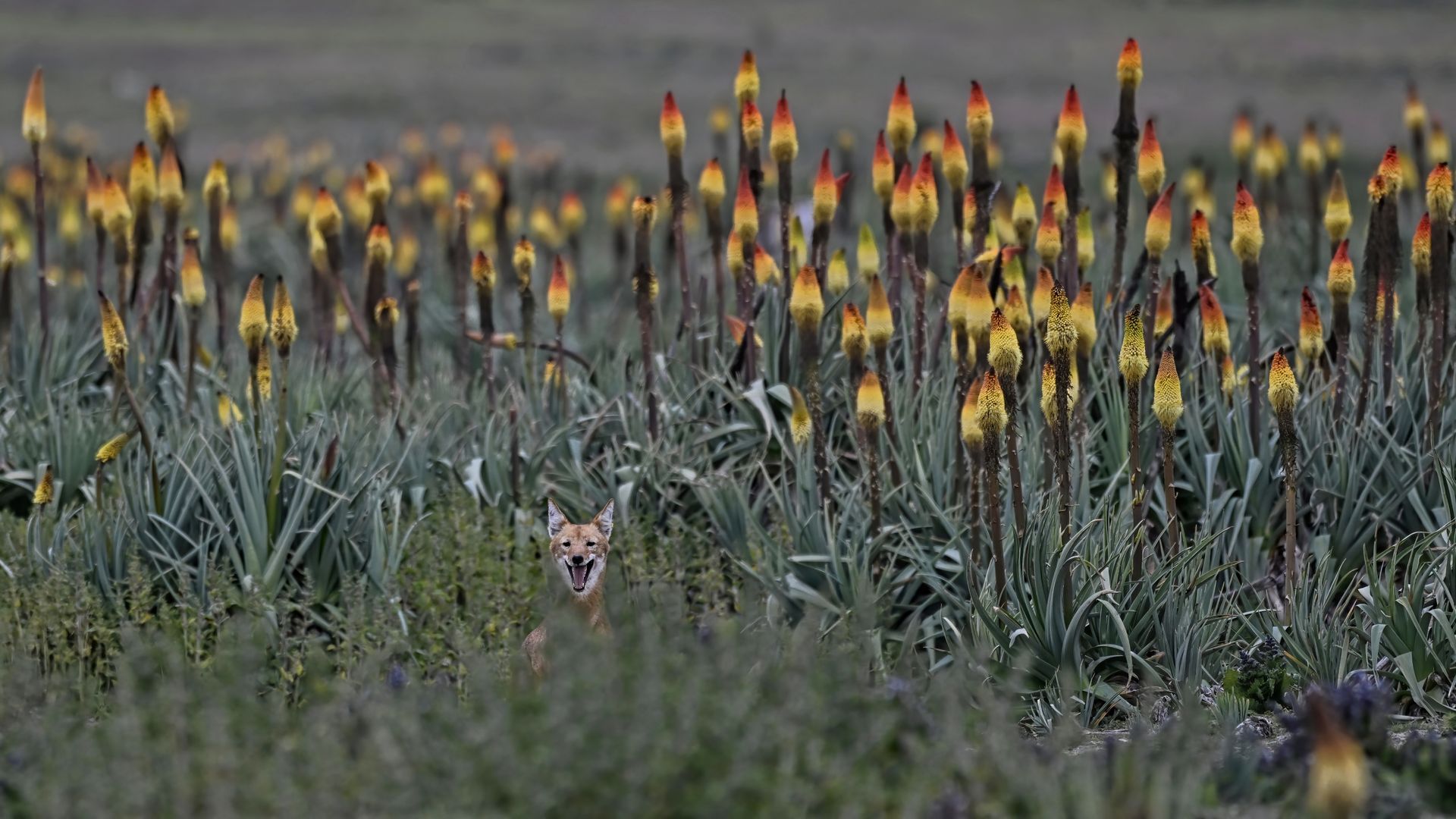
© Caroline Sauvin
© Abdi Samune
Afroalpine ecosystem: the Roof of Africa
Many unique plants and animals evolved in the isolation of the Ethiopian massif, also a place of great historical and cultural significance. The charismatic Ethiopian wolf is a powerful flagship for Afroalpine conservation.
Your support keeps us going
Together we can do this by strengthening our core projects: Monitoring & Research, One Health, Living with Wolves, Biodiversity Friendly Futures & Conservation Translocations
Together we can save Ethiopian wolves from extinction.