
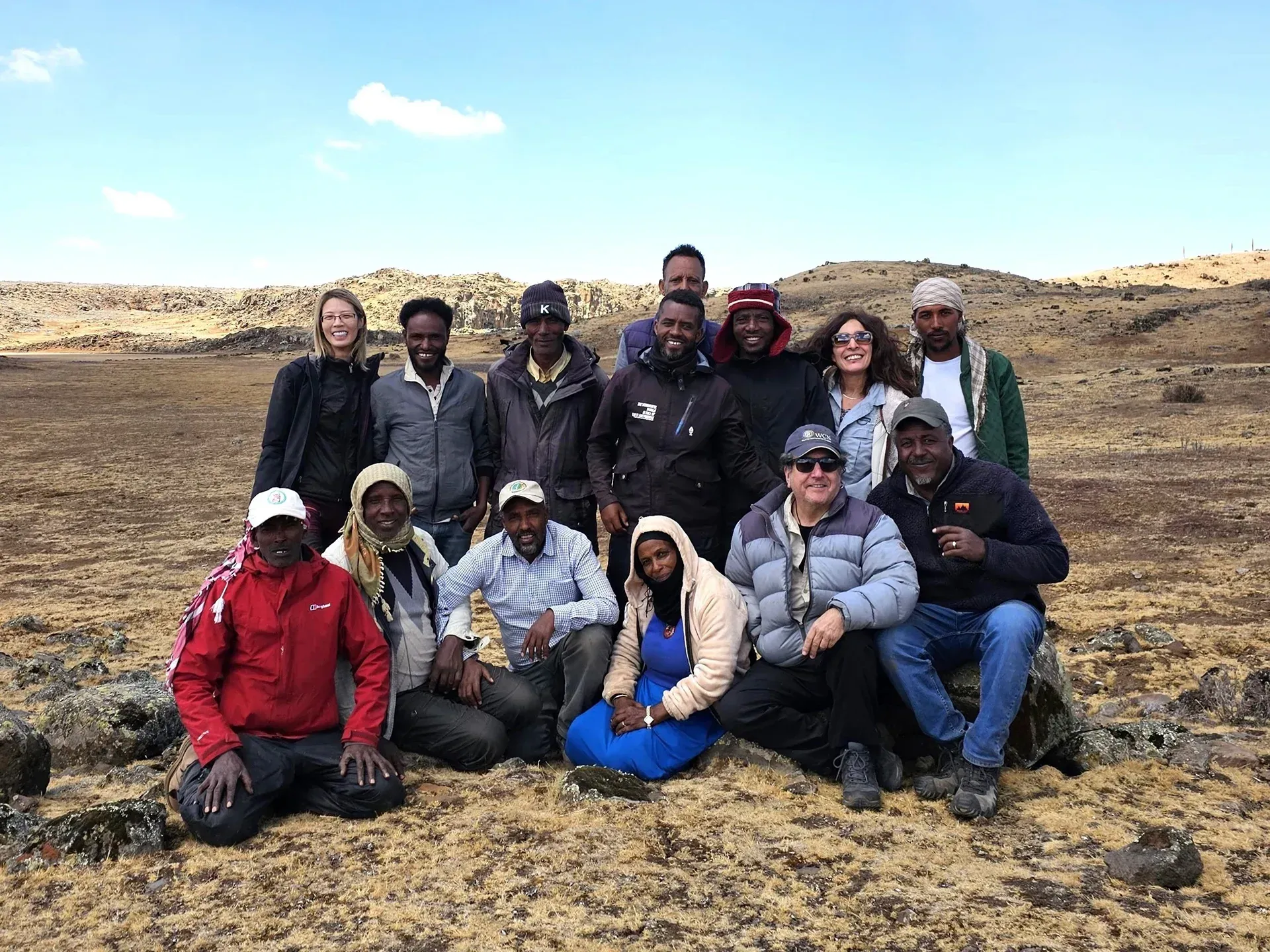

Ethiopia’s landscapes have changed quite remarkably over these few decades, and the tasks to protect Ethiopia’s nature and wildlife are enormous and as urgent as ever. While we can boast that the 10% of Ethiopian land set aside as protected areas is a clear national commitment to the conservation of nature, it is not enough. Many of these special places and the wildlife that live there are struggling - their protection is simply not effective. It’s not just that wildlife populations are shrinking, but many of the ecological functions of these landscapes are under threat. As highland swamps and bogs dry out, they lose their ability to soak up and release water downstream. These are not just issues for nature-lovers and conservationists, but for all Ethiopians. EWCP’s chief aim remains the protection of the charismatic endemic Ethiopian wolves. But species conservation can’t happen in isolation. We must deliver better habitat protection, not just for wild species but to enable sustainable livelihoods for the people living hand-in-hand with nature. We must continue to work with local people to protect the local ecology and support the health of people, livestock and the environment, while providing a home to these magnificent animals.
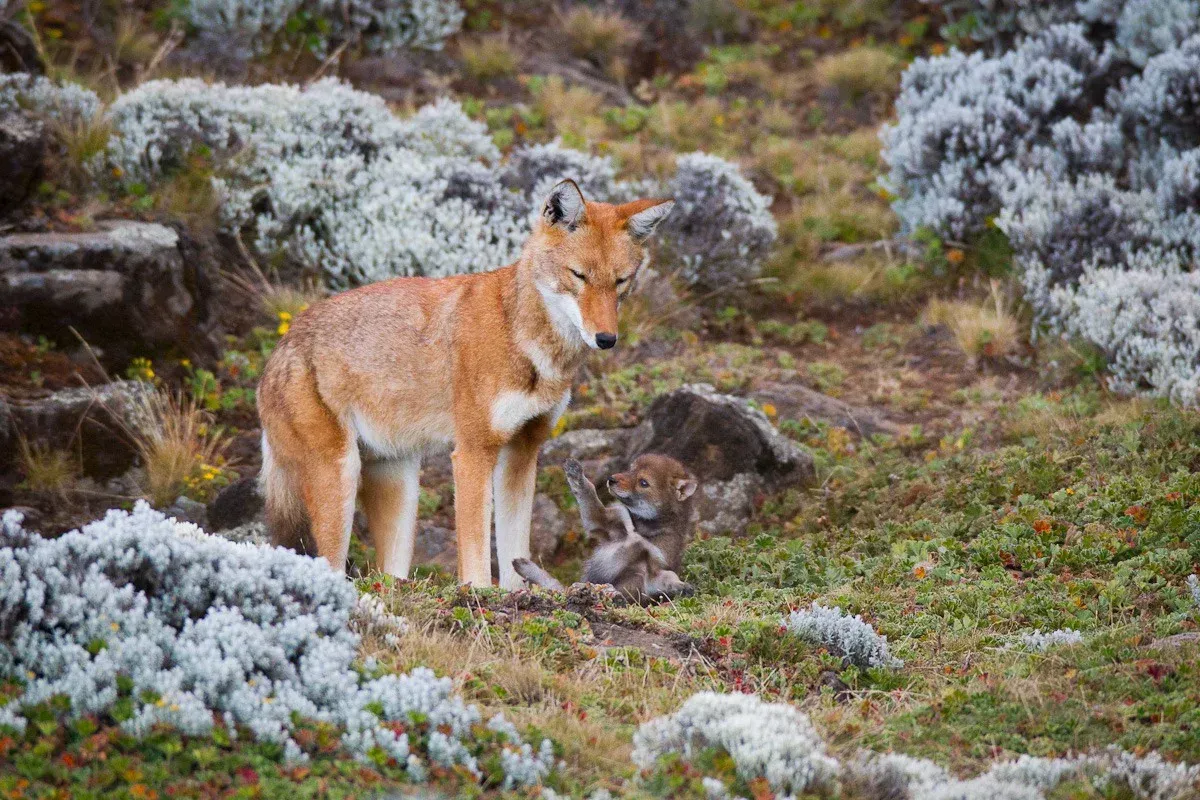
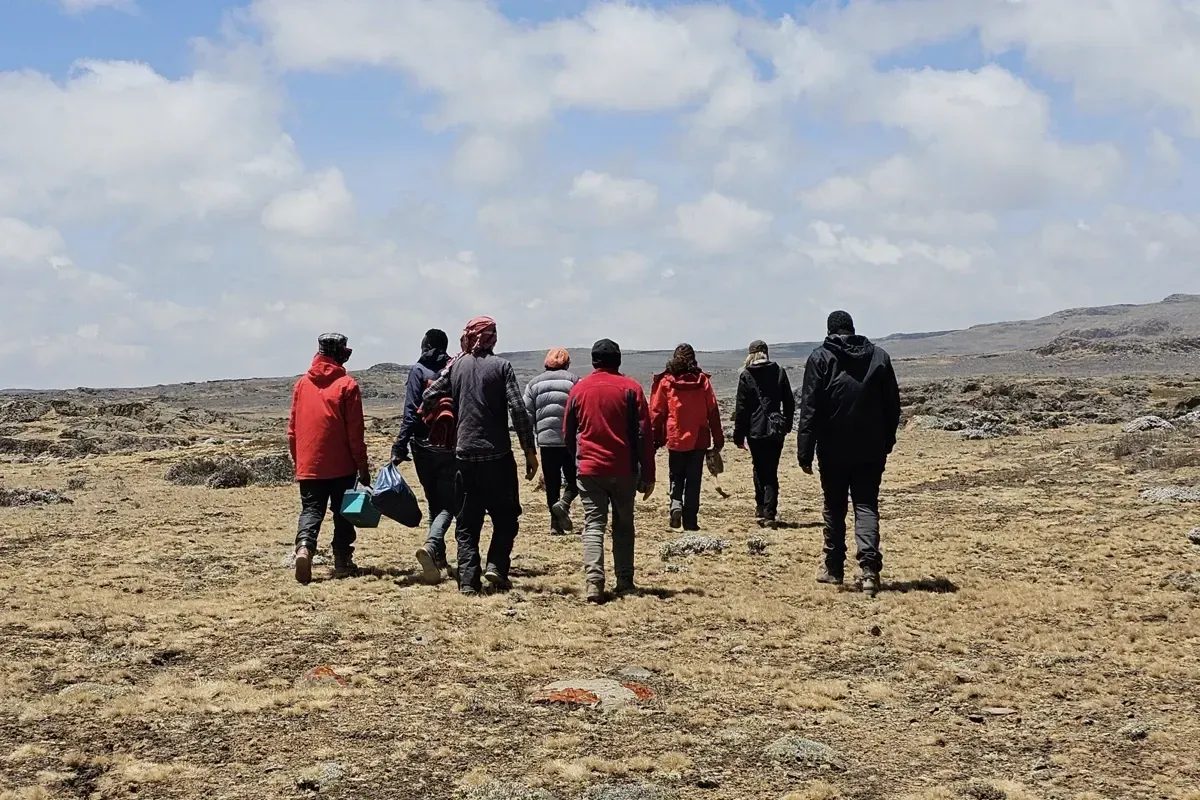
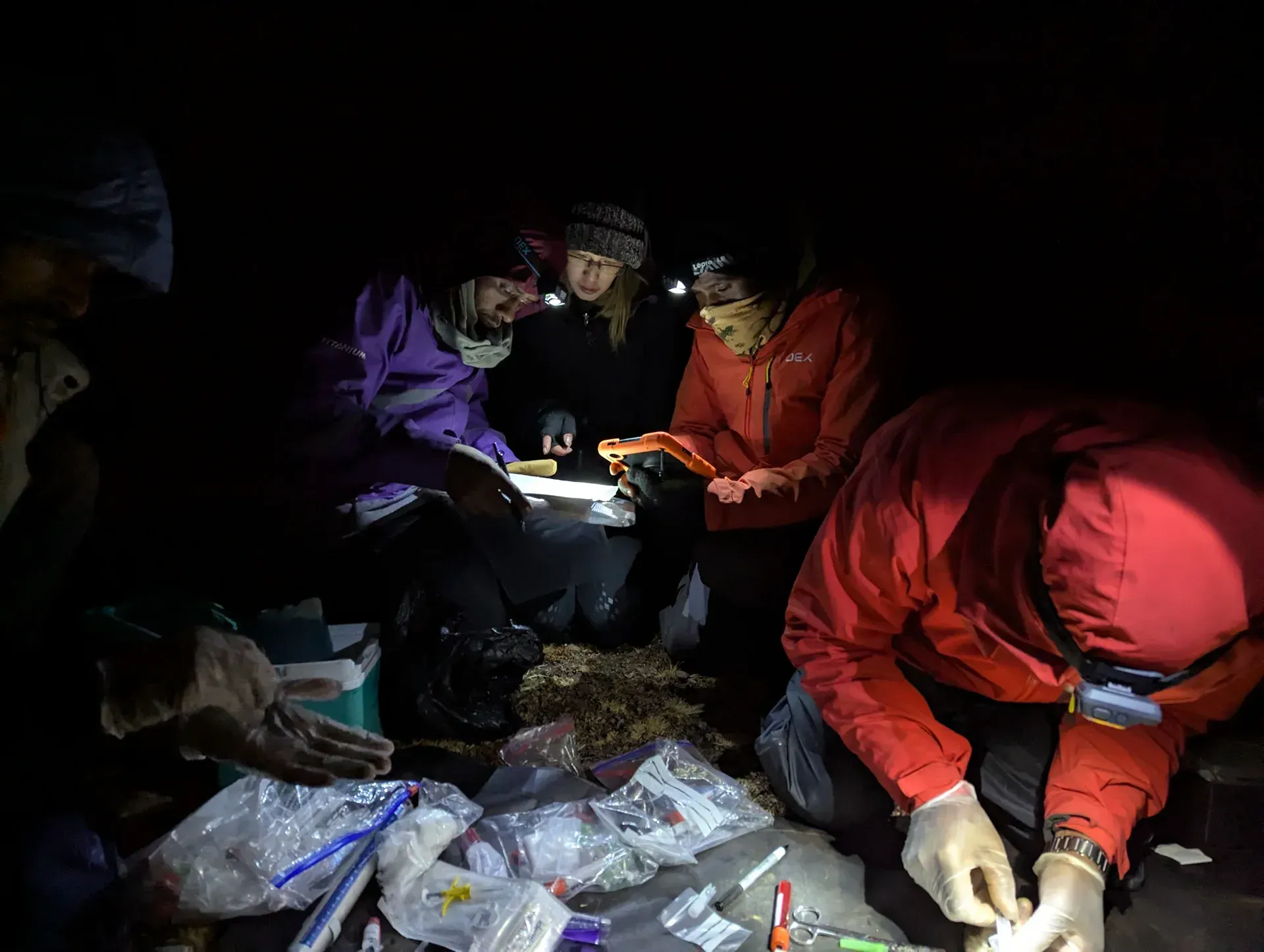
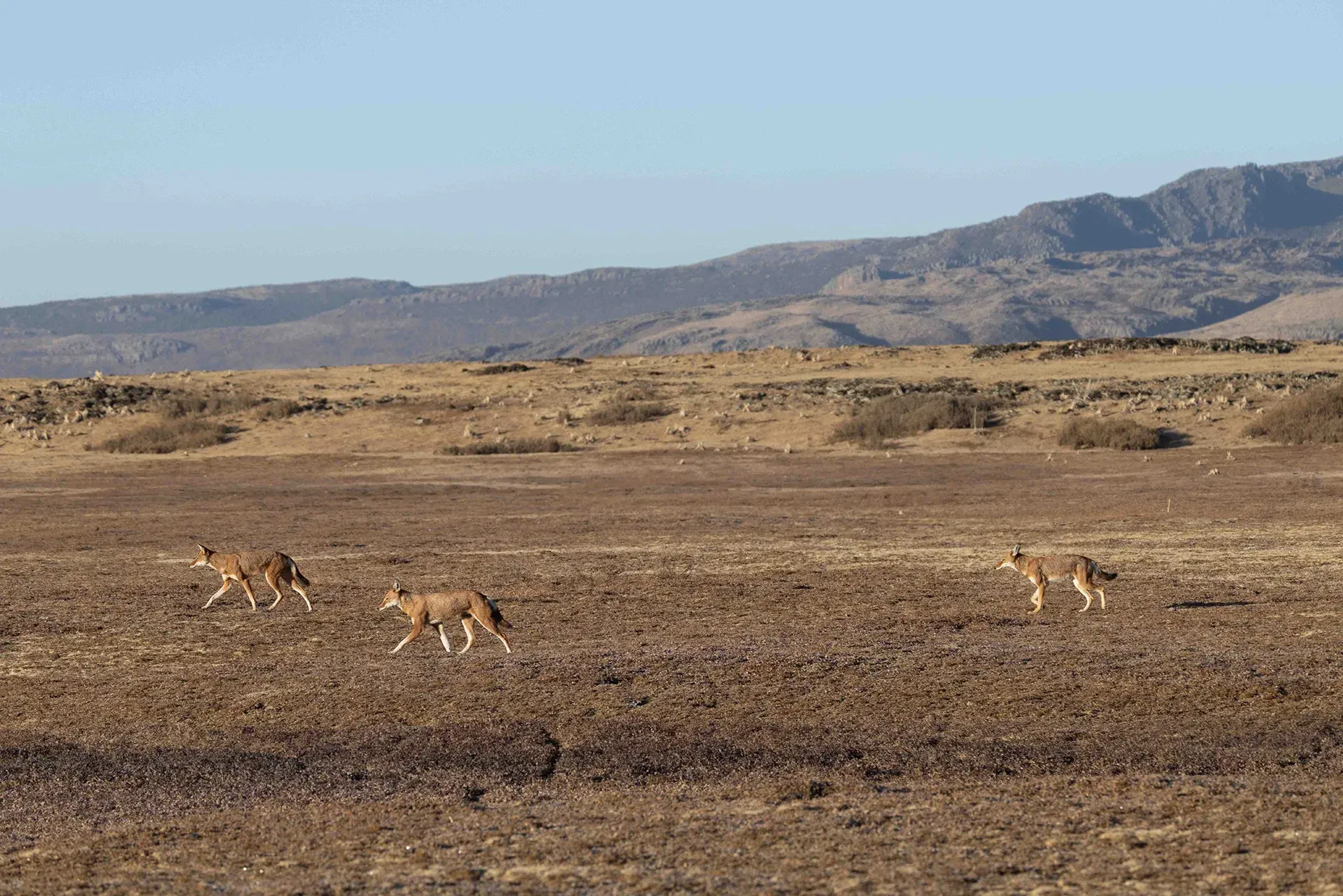
The monitoring of Ethiopian wolf packs is the backbone of EWCP’s long-term conservation work. With in-person observations from our skilled monitoring teams, our aim is to detect changes in the status and threats to Ethiopian wolf populations. From gathering data on pack composition and breeding success, to sounding early warnings about disease and human-wildlife conflict, this information allows us to develop evidence-based solutions to current and emerging conservation challenges. Last year, from April 2024 to March 2025, EWCP monitored 41 separate wolf packs in 17 different locations across 6 populations. We gathered a staggering 8,900 observations of wolves during a mammoth 10,400 monitor-hours of fieldwork. In rain and sun, high winds and freezing temperatures, wolf monitoring is a labour of love for these iconic animals. A truly impressive undertaking!

We are extremely saddened to learn of the armed attack on Mariri Environmental Centre and Niassa Carnivore Project Headquarters in Niassa Special Reserve, Mozambique, last week. Two of the NCP scouts, Domingos Daude and Fernando Paolo, have lost their lives, another was severly injured and two more are missing. Our condolences to their families, and to everyone at NCP during this difficult time. The full NCP Mariri press release is availble here .
Ethiopia’s landscapes have changed quite remarkably over these few decades, and the tasks to protect Ethiopia’s nature and wildlife are enormous and as urgent as ever. While we can boast that the 10% of Ethiopian land set aside as protected areas is a clear national commitment to the conservation of nature, it is not enough. Many of these special places and the wildlife that live there are struggling - their protection is simply not effective. It’s not just that wildlife populations are shrinking, but many of the ecological functions of these landscapes are under threat. As highland swamps and bogs dry out, they lose their ability to soak up and release water downstream. These are not just issues for nature-lovers and conservationists, but for all Ethiopians. EWCP’s chief aim remains the protection of the charismatic endemic Ethiopian wolves. But species conservation can’t happen in isolation. We must deliver better habitat protection, not just for wild species but to enable sustainable livelihoods for the people living hand-in-hand with nature. We must continue to work with local people to protect the local ecology and support the health of people, livestock and the environment, while providing a home to these magnificent animals.
The monitoring of Ethiopian wolf packs is the backbone of EWCP’s long-term conservation work. With in-person observations from our skilled monitoring teams, our aim is to detect changes in the status and threats to Ethiopian wolf populations. From gathering data on pack composition and breeding success, to sounding early warnings about disease and human-wildlife conflict, this information allows us to develop evidence-based solutions to current and emerging conservation challenges. Last year, from April 2024 to March 2025, EWCP monitored 41 separate wolf packs in 17 different locations across 6 populations. We gathered a staggering 8,900 observations of wolves during a mammoth 10,400 monitor-hours of fieldwork. In rain and sun, high winds and freezing temperatures, wolf monitoring is a labour of love for these iconic animals. A truly impressive undertaking!
We are extremely saddened to learn of the armed attack on Mariri Environmental Centre and Niassa Carnivore Project Headquarters in Niassa Special Reserve, Mozambique, last week. Two of the NCP scouts, Domingos Daude and Fernando Paolo, have lost their lives, another was severly injured and two more are missing. Our condolences to their families, and to everyone at NCP during this difficult time. The full NCP Mariri press release is availble here .
Ethiopia’s landscapes have changed quite remarkably over these few decades, and the tasks to protect Ethiopia’s nature and wildlife are enormous and as urgent as ever. While we can boast that the 10% of Ethiopian land set aside as protected areas is a clear national commitment to the conservation of nature, it is not enough. Many of these special places and the wildlife that live there are struggling - their protection is simply not effective. It’s not just that wildlife populations are shrinking, but many of the ecological functions of these landscapes are under threat. As highland swamps and bogs dry out, they lose their ability to soak up and release water downstream. These are not just issues for nature-lovers and conservationists, but for all Ethiopians. EWCP’s chief aim remains the protection of the charismatic endemic Ethiopian wolves. But species conservation can’t happen in isolation. We must deliver better habitat protection, not just for wild species but to enable sustainable livelihoods for the people living hand-in-hand with nature. We must continue to work with local people to protect the local ecology and support the health of people, livestock and the environment, while providing a home to these magnificent animals.
The monitoring of Ethiopian wolf packs is the backbone of EWCP’s long-term conservation work. With in-person observations from our skilled monitoring teams, our aim is to detect changes in the status and threats to Ethiopian wolf populations. From gathering data on pack composition and breeding success, to sounding early warnings about disease and human-wildlife conflict, this information allows us to develop evidence-based solutions to current and emerging conservation challenges. Last year, from April 2024 to March 2025, EWCP monitored 41 separate wolf packs in 17 different locations across 6 populations. We gathered a staggering 8,900 observations of wolves during a mammoth 10,400 monitor-hours of fieldwork. In rain and sun, high winds and freezing temperatures, wolf monitoring is a labour of love for these iconic animals. A truly impressive undertaking!